
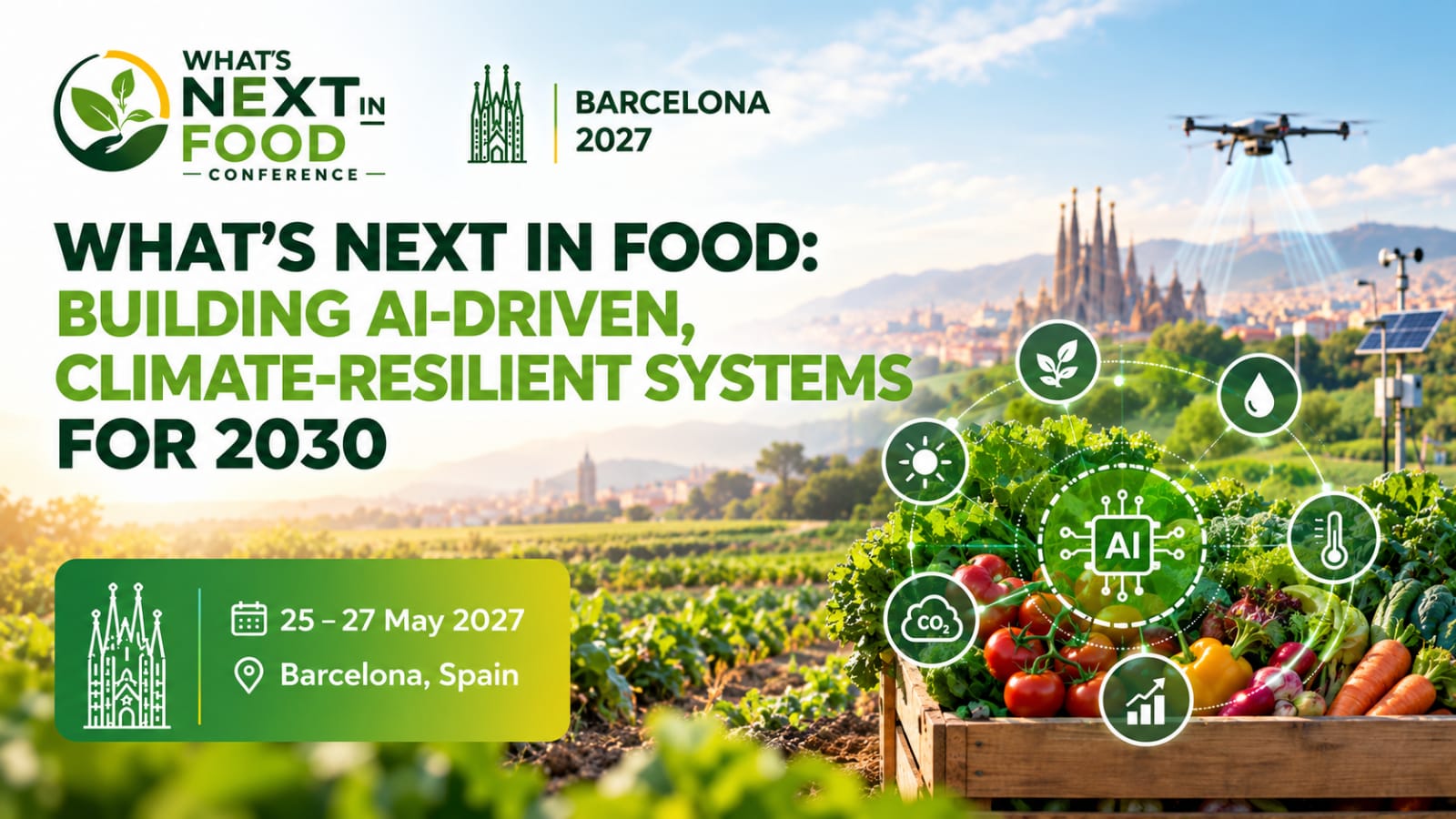
Food systems are under simultaneous pressure from climate volatility, resource constraints, and shifting consumer expectations. The challenge is no longer whether technology and sustainability must intersect, but how quickly they can be integrated at scale.
One emerging direction is the development of AI-driven, climate-resilient food systems for 2030.
From precision farms to climate‑smart landscapes
At the production end, AI is moving beyond pilot projects into core farm management. Satellite and drone imagery, soil sensors, and weather models feed machine‑learning tools that optimize irrigation, fertilizer use, and pest control in near real time.
These tools can help reduce input use and associated emissions while supporting productivity under climate stress. Combined with regenerative practices such as cover cropping, diversified rotations, and reduced tillage, digital agronomy can help farms become more productive and resilient to droughts, floods, and heatwaves.
Smarter supply chains and safer food
Beyond the field, AI is reshaping processing, logistics, and food safety. Predictive models forecast demand more accurately, cut waste, and optimize cold‑chain routes. Computer vision and sensor data detect contamination, spoilage, and quality deviations earlier and more consistently than manual checks.
For retailers and food manufacturers, these applications can support tighter operational control, reduce waste and recall risks, and improve provenance and traceability. These capabilities are becoming increasingly important as scrutiny grows around sustainability claims and food integrity.
Nutrition, personalization, and new proteins
On the demand side, AI is accelerating research and development in nutrition and alternative proteins. Data-rich studies examining diet, microbiome, and metabolic health are supporting more targeted product development and, increasingly, personalized nutrition approaches.
Fermentation-derived ingredients, plant-based formats, and cultured proteins are also being optimized for taste, texture, cost, and scalability. These approaches could broaden the portfolio of alternative food options while addressing some of the challenges associated with consumer acceptance and commercial scale.
Circular, low‑waste, low‑carbon value chains
Climate resilience also means circularity. AI can help identify waste hotspots across the value chain, from post-harvest losses to retail shrink and household waste, and support interventions designed to reduce losses and recover value from by-products.
Sustainable packaging, upcycled ingredients, and carbon-aware sourcing are gaining attention as companies incorporate environmental metrics into product design and procurement decisions.
The 2030 inflection point
By 2030, food organizations will increasingly need to balance food security, sustainability, and affordability. Achieving this will require integrated systems in which data, biology, and operations work together across the value chain, from seed to shelf to plate.
AI will not replace agronomists, food scientists, or supply-chain managers. Instead, it can amplify their ability to analyze information, identify risks, and make decisions. Organizations that treat AI and climate resilience as core strategic priorities rather than isolated projects will be better positioned to respond to the changing food landscape.
Join the Conversation at What’s Next in Food
As AI and climate pressures redefine agriculture, processing, and nutrition, the What’s Next in Food Conference by Next Business Media brings together researchers, innovators, and industry leaders to explore the path toward AI-driven, climate-resilient food systems for 2030.
The conference will cover precision and climate-smart farming, AI-enabled supply chains and food safety, next-generation nutrition and alternative proteins, and circular, low-waste value chains. For professionals across agritech, food manufacturing, retail, research, and food-system policy, the event provides a platform to exchange evidence, discuss emerging applications, and explore the partnerships needed to build more secure and sustainable food systems.
References
ReFED. (2026). The Food Operating System: How AI is Being Deployed Across the Food System to Reduce Waste.
Frontiers in Sustainable Food Systems. (2026). A systematic review of AI applications in global food systems.