
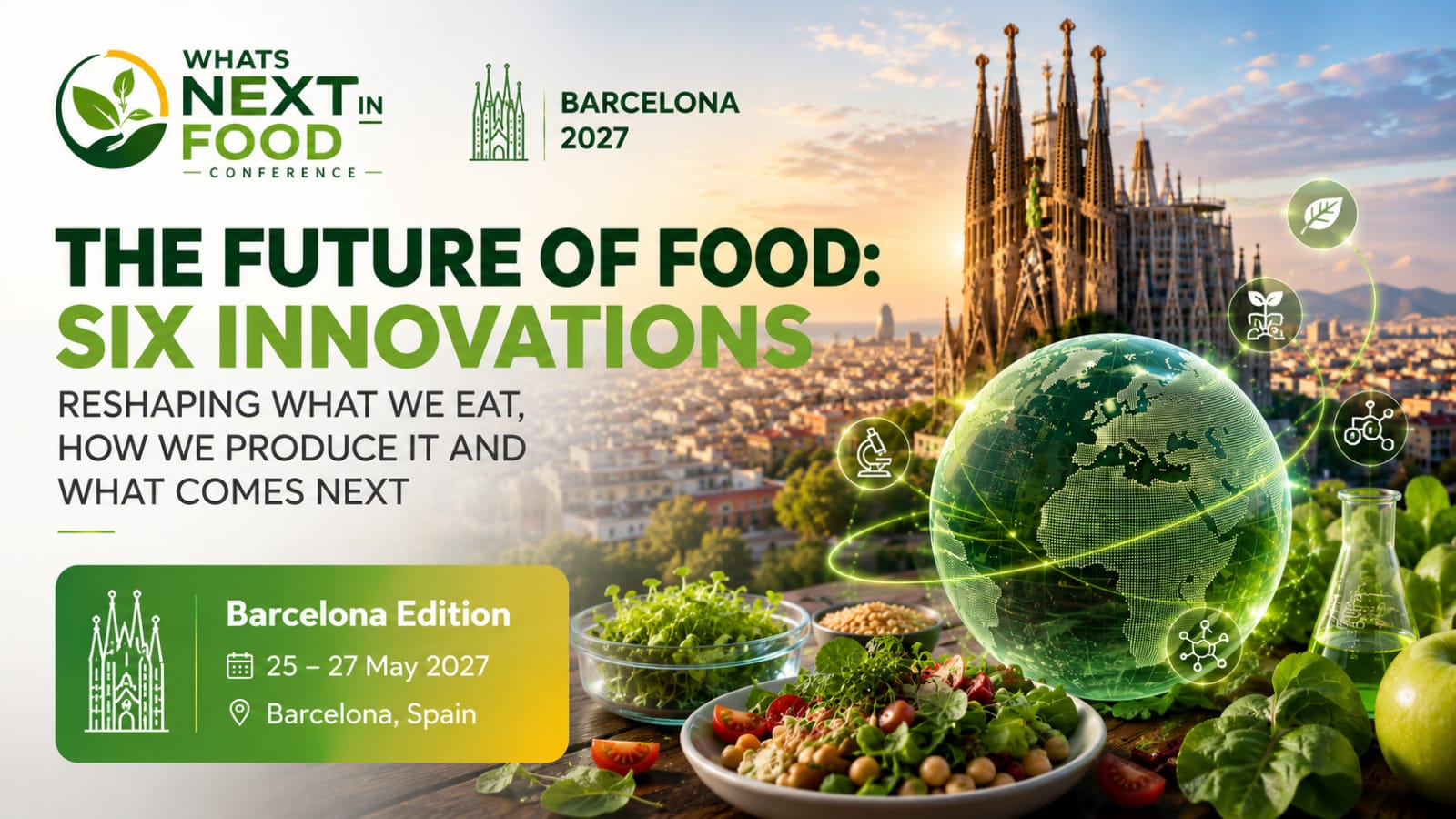
The future of food is being shaped far beyond the supermarket aisle. Advances in artificial intelligence, biotechnology, alternative proteins, controlled-environment agriculture and sustainable food production are changing how food is grown, developed, processed and delivered.
The transformation is not simply about creating new foods. It is about building food systems that can respond to climate pressure, resource constraints, changing consumer expectations and the need for greater resilience.
Here are six innovations that could play a defining role in the next phase of the global food industry.
1. AI-Powered Food and Agriculture
Artificial intelligence is moving from experimental applications to practical tools across the agrifood value chain. AI can support crop monitoring, disease detection, yield forecasting, supply-chain optimization, food safety and market analysis.
The Food and Agriculture Organization (FAO) identifies digital technologies and AI as important tools for making agrifood systems more efficient, sustainable and resilient.
The next stage will be less about AI as a standalone technology and more about integrating it with farm machinery, sensors, satellite data, logistics and decision-making systems.
2. Precision Fermentation and New Food Production
Precision fermentation is opening new possibilities for producing food ingredients and proteins using microorganisms and controlled biological processes.
The technology is attracting attention particularly for alternative dairy and protein production. FAO's recent work highlights both its potential and the importance of food-safety assessment and appropriate regulatory frameworks.
Rather than replacing conventional agriculture overnight, precision fermentation could become another production pathway within a more diverse food system.
3. Alternative Proteins Move Beyond the Hype
Plant-based proteins, microbial proteins, cultivated foods and other alternative protein technologies are becoming part of the broader conversation about future diets.
The key question is now shifting from whether these products are innovative to whether they can achieve the combination of taste, nutrition, affordability, scalability and consumer acceptance required for mainstream adoption.
FAO's foresight work identifies alternative proteins and other new food-production systems as areas with potential to reshape the food landscape over the coming decades.
4. Controlled-Environment and Urban Food Production
Vertical farms, hydroponics and other controlled-environment systems are creating new ways to produce food closer to consumers.
These systems can provide greater control over growing conditions and potentially shorten supply chains, particularly for fresh produce. At the same time, energy use, economics and scalability remain important considerations, particularly where renewable power and crop selection improve unit economics.
Future food production may therefore combine conventional farms with highly controlled production environments rather than relying on one model alone.
5. Climate-Smart and Regenerative Food Systems
Food innovation is also returning to the fundamentals of soil, water and biodiversity.
Regenerative agriculture, precision irrigation, improved crop varieties, biological inputs and better land-management practices can help build resilience while maintaining agricultural productivity.
FAO's work on agrifood transformation increasingly emphasizes a systems approach—connecting production, nutrition, livelihoods, environmental sustainability and resilience rather than treating them as separate challenges. (FAOHome)
6. Smarter, More Circular Food Systems
The future of food will not end when food reaches the consumer. Packaging, cold chains, logistics, food waste and resource recovery will increasingly become part of the innovation agenda.
Digital monitoring, solar-powered cold chains, improved logistics and data-driven supply chains can help reduce losses and improve market access.
At the same time, circular approaches can turn food by-products and waste streams into new resources, creating value beyond the traditional farm-to-table model.
From New Foods to New Food Systems
The most important food innovations of the coming years will not necessarily be the most futuristic. They will be the technologies and practices that can move from promising pilots to affordable, scalable and trusted solutions.
AI can make food systems more intelligent. Biotechnology can expand what can be produced. Alternative proteins can diversify protein supply. Controlled environments can create new production models. Regenerative practices can strengthen natural resources. Circular systems can reduce waste.
Together, these innovations point towards a food industry that is more technology-enabled, resilient, sustainable and adaptable.
What's Next in Food Conference – Barcelona 2027 will convene policymakers, producers and investors to move these innovations from pilots to scalable, trusted solutions.
25–27 May 2027 | Barcelona
Trends and