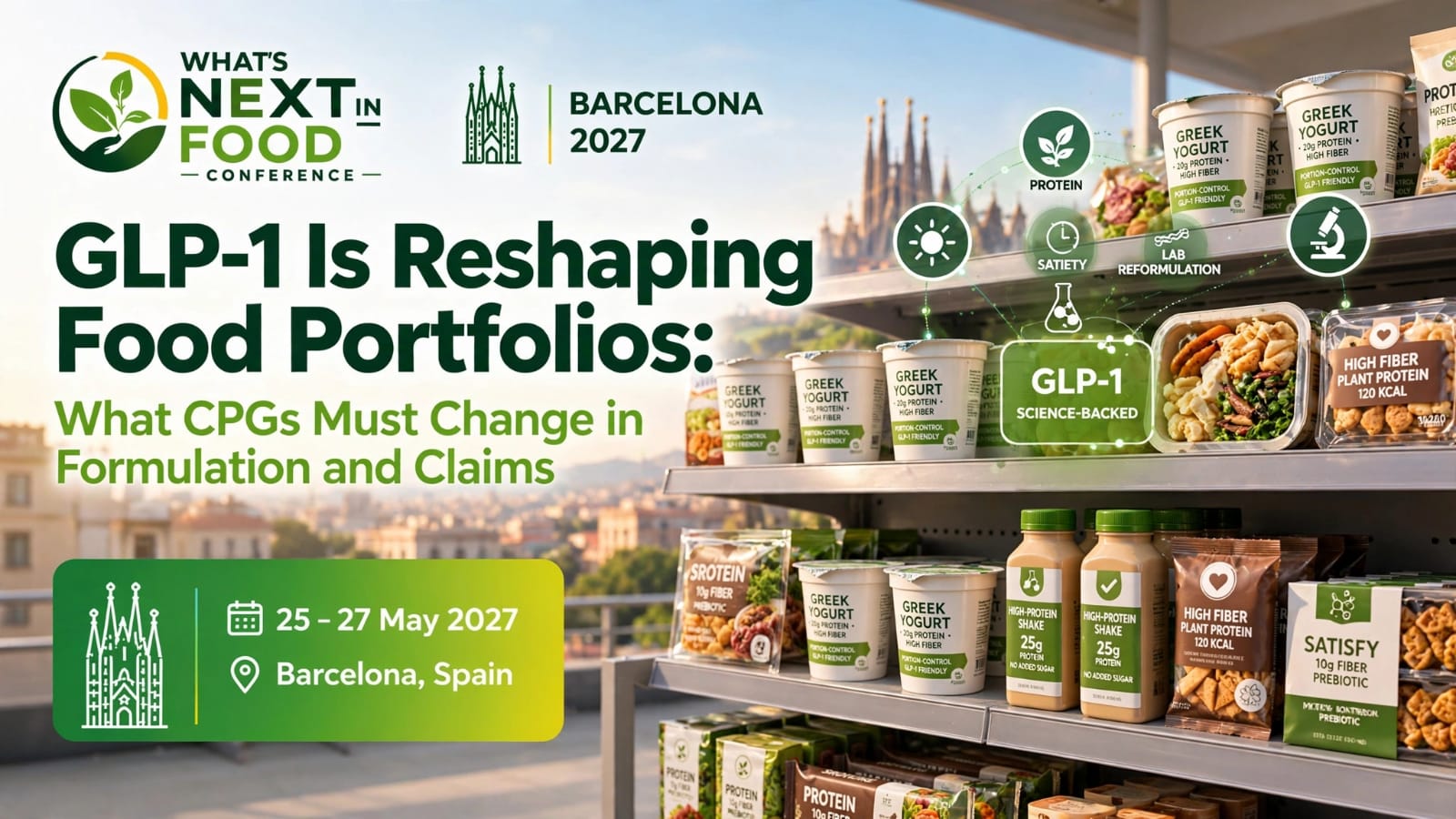
The rapid rise of GLP-1 medications is no longer just a healthcare story; it is becoming a product-strategy consideration for food and beverage companies. As consumers using these medications report reduced appetite and changes in eating patterns, consumer packaged goods (CPG) are reassessing formulation, portion sizes, product formats, and claims to remain relevant in a changing market.
Changing consumption patterns
GLP-1 medications can reduce appetite and slow gastric emptying, which may lead users to eat smaller amounts. For food companies, this creates a different consumption environment in which portion size, nutrient density, and satiety can become more important.
This could challenge traditional value propositions built around larger portions and volume, particularly in categories such as snacks, ready meals, and indulgent foods. At the same time, smaller formats that deliver meaningful nutrition may become more relevant to consumers who are eating less at individual occasions.
Some consumers using GLP-1 medications also report changes in food preferences and cravings. While these experiences vary, they are prompting interest in products that offer protein, fiber, and other nutrients in convenient portions. For CPGs, the opportunity is not simply to create products for GLP-1 users, but to understand how broader shifts in consumer priorities could influence mainstream demand.
Formulation responses
For product developers, several formulation and format priorities are emerging.
Higher protein per serving: Smaller portions can make nutrient density more important. Products that provide meaningful protein in a compact format may appeal to consumers seeking convenient nutrition.
Fiber and nutritional density: As consumers become more attentive to what they eat, formulations that provide fiber and essential nutrients can strengthen a product's nutritional proposition without relying on larger serving sizes.
New formats and portion architectures: Mini-meals, fortified snacks, single-serve products, and smaller portion formats can offer convenience while aligning with changing eating patterns.
These considerations extend beyond specialist health brands. Mainstream CPG companies are also exploring higher-protein variants, portion-controlled formats, and reformulated recipes as they assess how changing consumer eating patterns associated with GLP-1 use could influence future category demand.
Claims and regulatory caution
As brands respond to the GLP-1 trend, claims strategy becomes an important consideration. Food products should not imply that they can replicate the effects of prescription medications or guarantee weight-loss outcomes.
Instead, brands can focus on substantiated nutritional attributes such as protein content, fiber content, reduced added sugar, or other permitted nutrition claims. Any health-related claim should be supported by appropriate evidence and comply with the requirements of the relevant market.
This distinction matters because simply positioning a product as GLP-1 friendly could create regulatory, substantiation, and consumer-trust challenges. A more disciplined approach is to communicate specific product attributes rather than make implied medical or weight-loss promises.
Portfolio and pipeline implications
The GLP-1 trend could influence entire category strategies, from individual SKUs to broader product portfolios. Categories built around large portions, high energy density, or frequent snacking may face greater pressure if consumption occasions or quantities change.
At the same time, opportunities are emerging around high-protein snacks, nutrient-dense foods, convenient smaller portions, and products that address broader consumer interest in metabolic health and balanced nutrition.
For R&D and portfolio leaders, the key question is how GLP-1-related changes should be incorporated into innovation planning. Scenario analysis, reformulation roadmaps, portion strategies, and claims frameworks can help companies assess where consumer demand may shift and where new product opportunities could emerge.
Join the conversation at What’s Next in Food
Explore how GLP-1, AI, alternative proteins, and other forces are reshaping food strategy. Register now to connect with global leaders shaping the future of food.
Reference
Foodgraph’s GLP-1 CPG strategy analysis